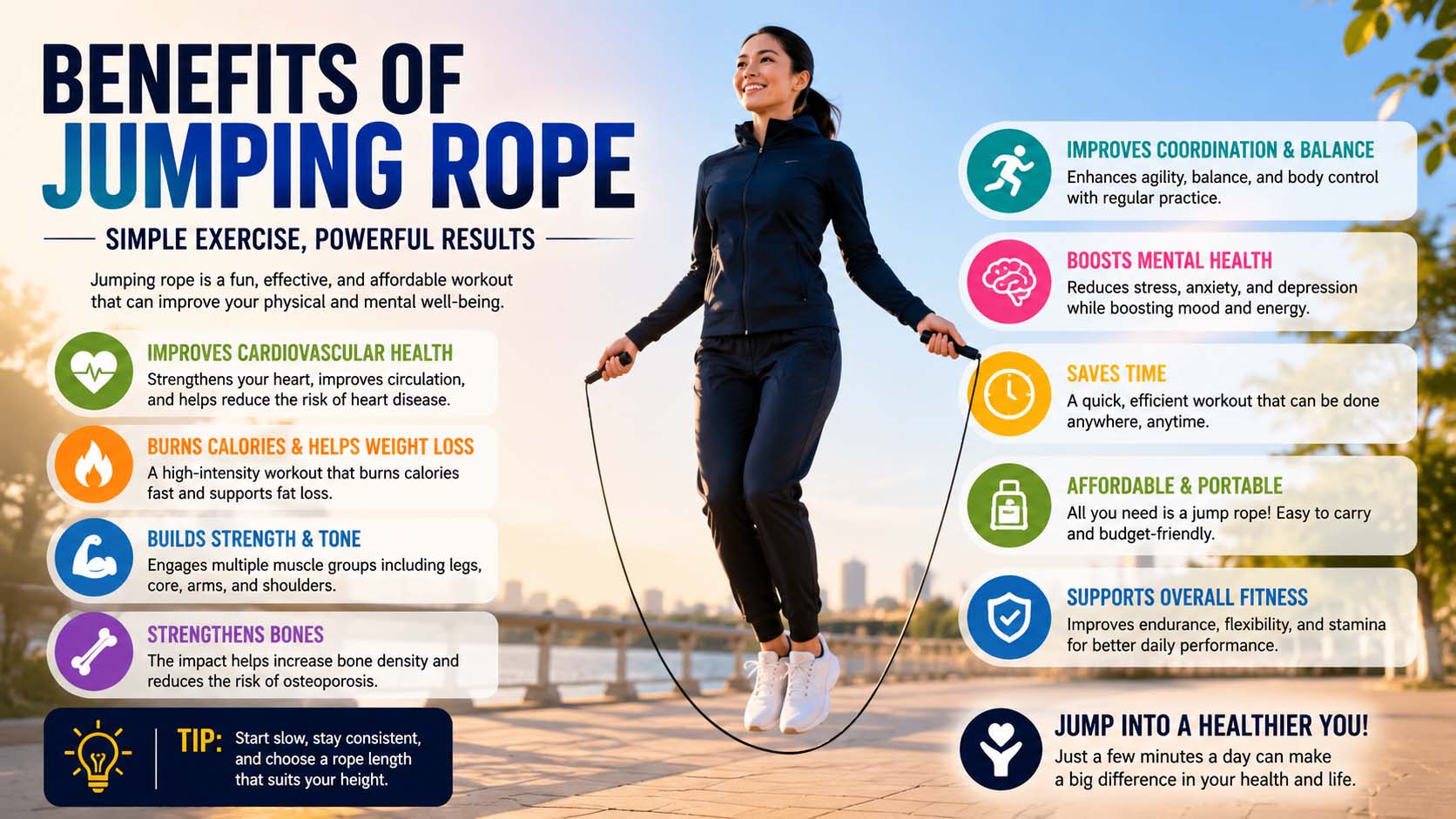
If you’re looking for an affordable workout that fits almost anywhere, the benefits of jumping rope are hard to ignore. This classic exercise isn’t just for playgrounds or boxers. It provides an effective full-body workout that improves cardiovascular fitness, coordination, endurance, and calorie burning in just a few minutes.
Whether your goal is better overall fitness, weight management, or simply adding variety to your routine, jumping rope offers an efficient way to stay active without expensive equipment.
Quick Overview of the Benefits
| Benefit | How It Helps |
|---|---|
| Improves heart health | Raises heart rate and supports cardiovascular fitness |
| Burns calories | Helps increase daily energy expenditure |
| Builds endurance | Improves stamina over time |
| Strengthens muscles | Works calves, shoulders, core, and legs |
| Improves coordination | Develops rhythm, timing, and balance |
| Supports bone health | Weight-bearing activity may help maintain bone strength |
| Portable workout | Requires minimal equipment and space |
What Are the Benefits of Jumping Rope?
Many people ask, what are the benefits of jumping rope compared with other forms of exercise.
One reason it remains so popular is that it combines aerobic exercise with muscle engagement. Every jump challenges multiple parts of your body while keeping your heart working harder.
Unlike some workouts that require machines or gym memberships, all you need is a properly sized jump rope and a safe surface.
Benefits of Jumping Rope for Heart Health
One of the biggest health benefits of jumping rope is improved cardiovascular fitness.
As your heart rate increases, your heart and lungs work together to deliver oxygen more efficiently throughout your body.
For beginners, even short sessions performed consistently can make a noticeable difference.
If you’re wondering about the best time to workout, choosing a time when you feel energetic and can stay consistent often matters more than the exact hour of the day.
Supports Healthy Weight Management
Jumping rope burns calories quickly because it combines continuous movement with full-body effort.
The exact number of calories burned depends on factors such as:
- Body weight
- Workout intensity
- Fitness level
- Exercise duration
While jumping rope alone won’t guarantee weight loss, combining regular exercise with balanced nutrition can support a healthy body weight.
Strengthens Multiple Muscle Groups
Jumping rope activates much more than your legs.
During each jump, your body relies on several muscle groups, including:
- Calves
- Quadriceps
- Hamstrings
- Glutes
- Core muscles
- Shoulders
- Forearms
Your core also works continuously to stabilize your body and maintain balance throughout the movement.
Improves Coordination and Balance
Every jump requires timing between your hands, feet, and eyes.
As you practice regularly, your coordination naturally improves.
This benefit isn’t limited to athletes. Better balance and coordination may also make everyday activities easier and reduce the risk of certain falls as people age.
Boosts Endurance
Endurance develops when your body becomes more efficient at using oxygen during exercise.
Starting with short sessions and gradually increasing your workout time helps improve stamina without placing unnecessary stress on your joints.
Over several weeks, many beginners notice they recover more quickly between exercise sessions.
May Help Support Bone Health
Jumping rope is considered a weight-bearing exercise.
Activities that place healthy stress on bones may help maintain bone strength as part of an active lifestyle.
People with osteoporosis, joint injuries, or other medical conditions should speak with a healthcare professional before starting high-impact exercises.
Benefits of Jumping Rope for Beginners
You don’t need advanced skills to start.
Most beginners can begin with:
- 20 to 30 seconds of jumping
- 30 to 60 seconds of rest
- Repeat for 10 to 15 minutes
Building confidence gradually is much more effective than trying to jump continuously for long periods.
Wearing supportive athletic shoes and exercising on a forgiving surface, such as a gym floor or rubber track, can also reduce impact.
Benefits of Jumping Rope for 5 Minutes
The benefits of jumping rope for 5 minutes may surprise people who think workouts need to last an hour.
Five minutes of moderate-to-vigorous jumping can:
- Raise your heart rate
- Improve circulation
- Wake up your muscles
- Increase energy levels
- Serve as an effective warm-up
Although longer workouts generally burn more calories, short sessions still contribute to your overall physical activity.
How Long Should You Jump Rope?
The right duration depends on your experience and goals.
Beginners
Aim for:
- 10–15 minutes total
- Frequent rest breaks
- Three to four sessions per week
Intermediate Exercisers
Once your fitness improves, you can gradually increase sessions to 20–30 minutes while adjusting intensity as needed.
Advanced Athletes
Experienced exercisers often use jump rope as part of interval training, conditioning workouts, or sports-specific training.
Some also combine it with resistance exercises. For example, alternating jump rope intervals with movements that highlight the benefits of a weighted vest can create a varied training routine for those with prior exercise experience.
Can Jumping Rope Improve Athletic Performance?
Many athletes include jump rope in their training because it develops quick footwork, rhythm, and agility.
Sports that involve rapid direction changes, sprinting, or explosive movement often benefit from improved coordination and lower-body control.
While jump rope isn’t a replacement for sport-specific practice, it can complement many fitness programs by improving movement efficiency and overall conditioning.
Benefits of Jumping Rope Every Day
The benefits of jumping rope everyday depend on your fitness level, workout intensity, and recovery habits.
For many healthy adults, short daily sessions can help build consistency and improve cardiovascular fitness. Still, your body also needs time to recover, especially if you’re new to high-impact exercise.
Regular jump rope workouts may help:
- Improve stamina
- Increase coordination
- Strengthen lower-body muscles
- Support healthy weight management
- Build a lasting exercise habit
If your legs feel unusually sore or your joints become painful, take a rest day or switch to a lower-impact activity until you recover.
How to Get Started Safely
Starting with good technique reduces your risk of injury and makes workouts more enjoyable.
Keep these tips in mind:
- Choose a rope that matches your height.
- Land softly on the balls of your feet.
- Keep your elbows close to your body.
- Use small wrist movements instead of large arm swings.
- Jump only high enough for the rope to pass beneath your feet.
It’s also helpful to warm up with light movement before your first set and cool down with gentle stretching afterward.
Common Mistakes to Avoid
Many beginners improve faster by avoiding a few simple errors.
Jumping Too High
Higher jumps use more energy and increase the impact on your joints.
Instead, aim for small, controlled jumps.
Using the Wrong Surface
Concrete creates more impact than softer surfaces.
Whenever possible, jump on a gym floor, rubber mat, or wooden surface.
Progressing Too Quickly
Increasing workout time too fast may lead to overuse injuries.
Build your sessions gradually from week to week.
Recovery Matters Just as Much as Exercise
Your muscles become stronger during recovery, not while you’re exercising.
Make recovery part of your routine by:
- Sleeping enough each night
- Staying hydrated
- Eating balanced meals
- Taking rest days when needed
Many people also ask when is the best time to workout. While research suggests there are benefits to exercising at different times of the day, the best choice is the one you can stick with consistently.
Nutrition to Support Jump Rope Training
Exercise works best alongside healthy eating.
Include a mix of:
- Lean protein
- Whole grains
- Fruits
- Vegetables
- Healthy fats
If you’re increasing your training volume or strength workouts, you may also want to learn how to choose the best protein powder based on your individual nutrition needs and activity level.
Hydration is equally important. Drinking fluids before and after exercise supports normal body functions, and many people enjoy the benefits of drinking warm water as part of their morning wellness routine, although plain water at any comfortable temperature is effective for staying hydrated.
Who Should Be Careful With Jump Rope?
Jumping rope is safe for many healthy people, but it isn’t the right choice for everyone.
Speak with a healthcare professional before starting if you have:
- Significant knee pain
- Hip or ankle injuries
- Severe arthritis
- Balance disorders
- Certain heart or lung conditions
Pregnant individuals or anyone returning to exercise after surgery or a long illness should also seek personalized medical advice before beginning a new fitness program.
Simple Weekly Plan for Beginners
If you’re unsure where to start, try this basic schedule:
| Day | Activity |
|---|---|
| Monday | 10 minutes of jump rope with rest breaks |
| Tuesday | Walking or gentle stretching |
| Wednesday | 12–15 minutes of jump rope |
| Thursday | Rest or light activity |
| Friday | 15 minutes of jump rope |
| Saturday | Strength or mobility exercises |
| Sunday | Rest and recovery |
Adjust the plan based on your fitness level and how your body feels.
Frequently Asked Questions
Is jumping rope better than running?
Both exercises provide excellent cardiovascular benefits.
Jumping rope can burn a similar number of calories in less time for some people, while running may be easier to sustain for longer sessions. The better option depends on your goals, fitness level, and personal preference.
Can jumping rope help with weight loss?
It can support weight loss by increasing calorie expenditure. However, lasting results usually come from combining regular physical activity with a balanced eating pattern and healthy lifestyle habits.
How often should beginners jump rope?
Most beginners do well with three or four sessions per week, allowing time for recovery between workouts. As fitness improves, frequency can increase if your body tolerates it well.
Do I need expensive equipment?
No.
A quality jump rope, supportive athletic shoes, and a safe workout surface are usually all you need.
Is five minutes enough?
Yes. Even five minutes of moderate-intensity jumping can raise your heart rate and contribute to your daily physical activity. As your endurance improves, you can gradually extend your sessions.
Build Fitness One Jump at a Time
The benefits of jumping rope go far beyond calorie burning. This simple exercise can improve heart health, coordination, endurance, balance, and muscular fitness while requiring very little equipment or space.
Start slowly, focus on proper technique, and increase your workout time gradually. Combined with good nutrition, adequate recovery, and a consistent routine, jumping rope can become an enjoyable part of a healthy lifestyle for years to come. If you have ongoing joint pain, a medical condition, or concerns about starting a new exercise program, consult a qualified healthcare professional for personalized guidance.